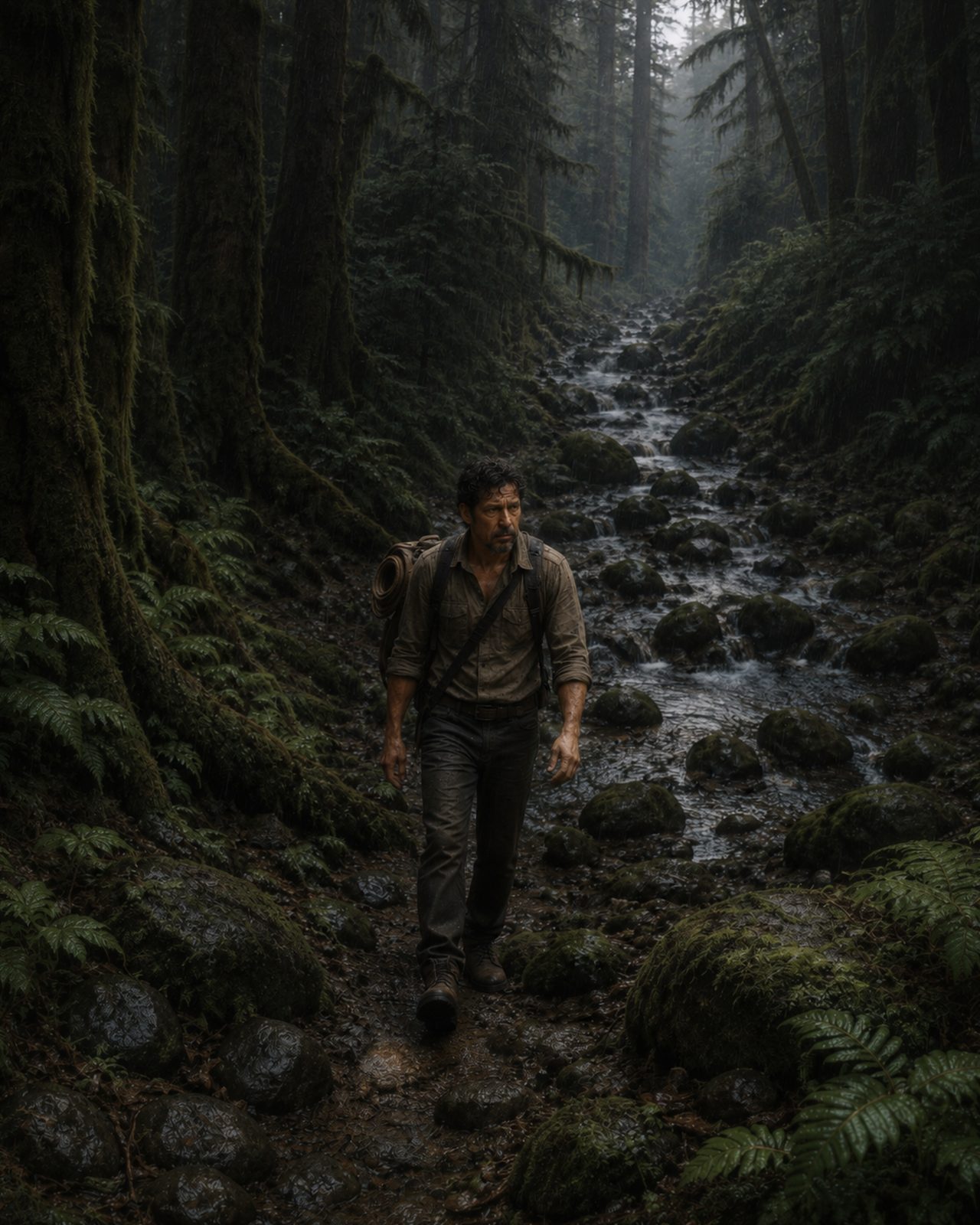
Walt had chosen the Olympic wilderness the way some men would choose a room with the gas left on. Quietly. Deliberately. Without a note, because there was no one left to read one.
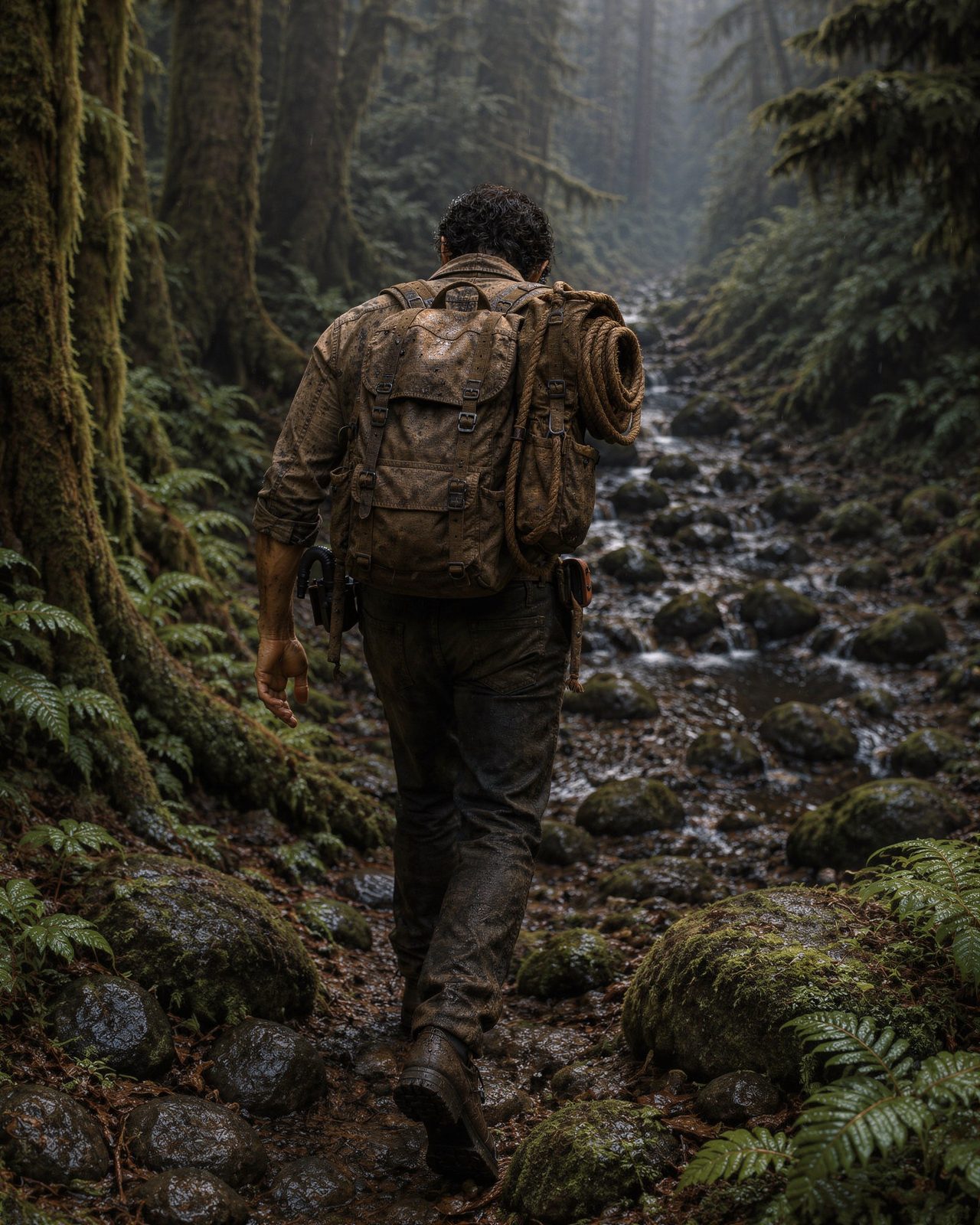
A week of walking had worn the intention down to something duller than resolve. He'd stopped counting days. He'd stopped, mostly, thinking in words at all. The forest had a way of doing that to a mind that came to it broken. It didn't console him. It didn't need to. It went on being enormous and indifferent, and there was a mercy in that indifference he hadn't expected.
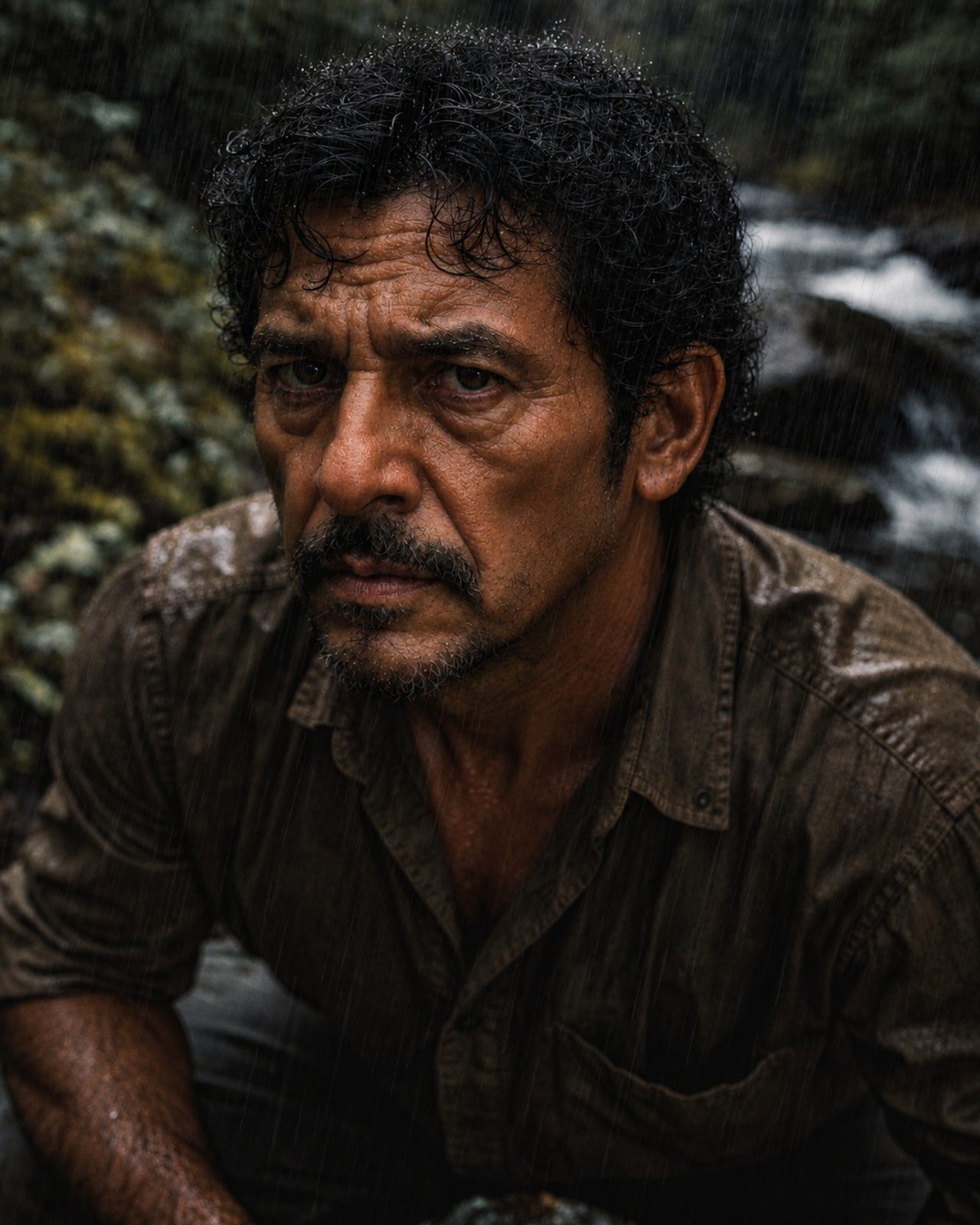
He had found the creek by sound before he found it by sight — water over stone, a small, ordinary music. He knelt to drink, and that was when he saw the shape half-fallen into a bank of stinging nettle, arms stretched out on a body that was almost, but not quite, a man's.
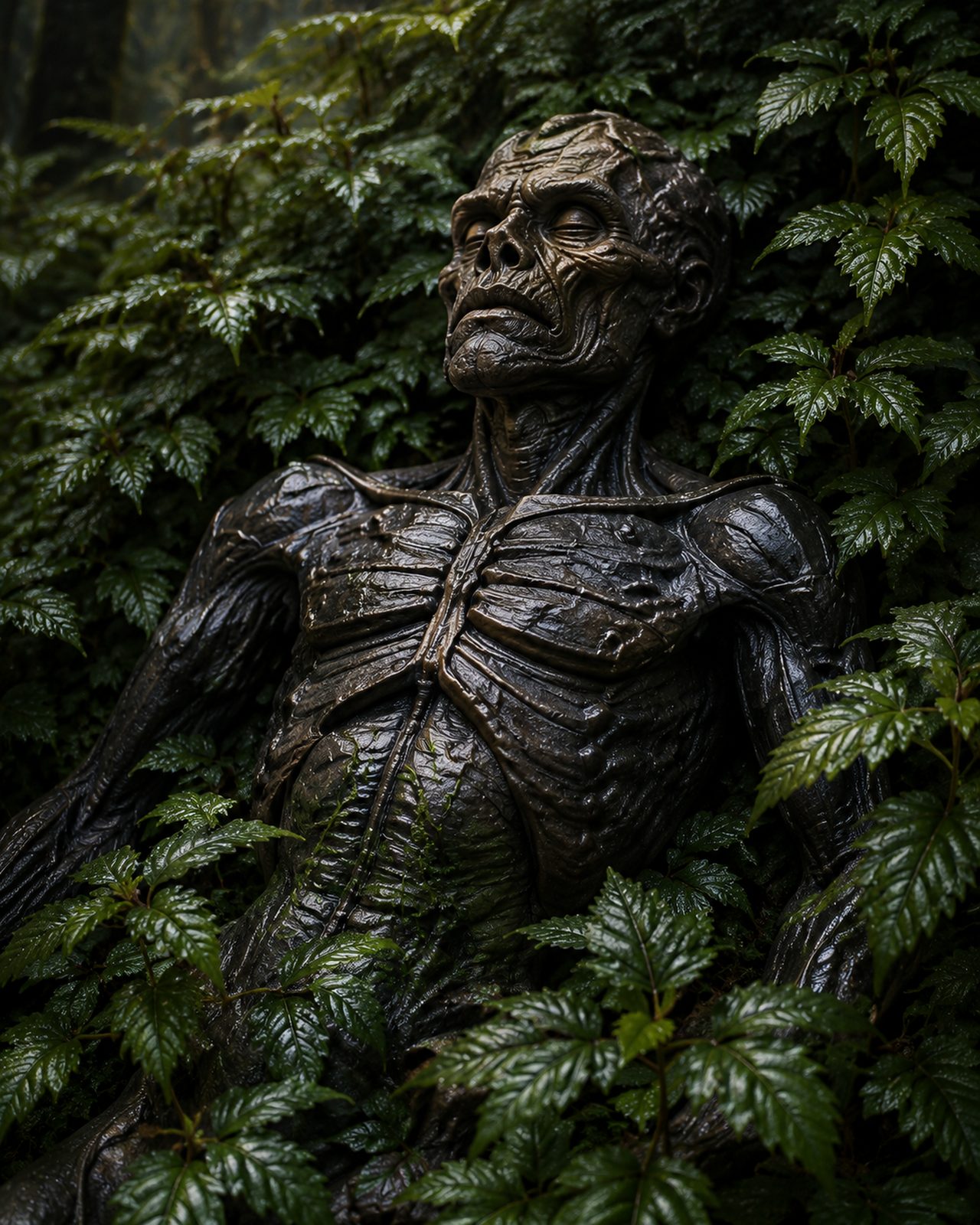
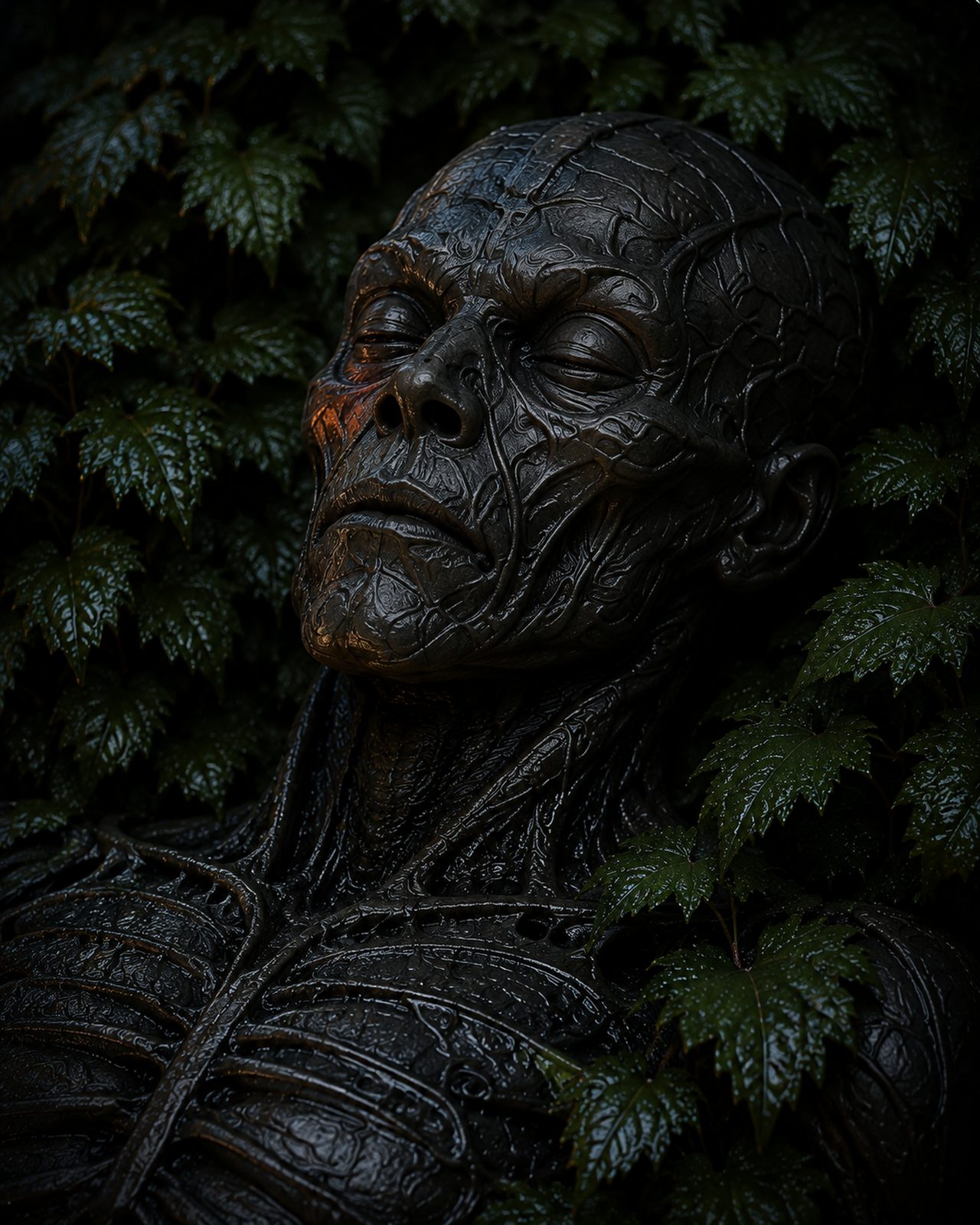
Later, Walt would not be able to say how long he sat with it. The skin was grey-green going to ash at the extremities, a color no fever produced in anything born of Earth. It had gone into the nettle bed by accident or by desperation, and its body had answered the ordinary poison of an ordinary plant the way no ordinary body should: the skin drawn tight and dark over every rib, wet-looking, lacquered. The poison had gone in and set. The mouth was shut in a hard lipless seam, built strangely, like a mouth designed by someone who'd only heard mouths described. A pulse, faint, at a throat with two ridges where a throat should have one.
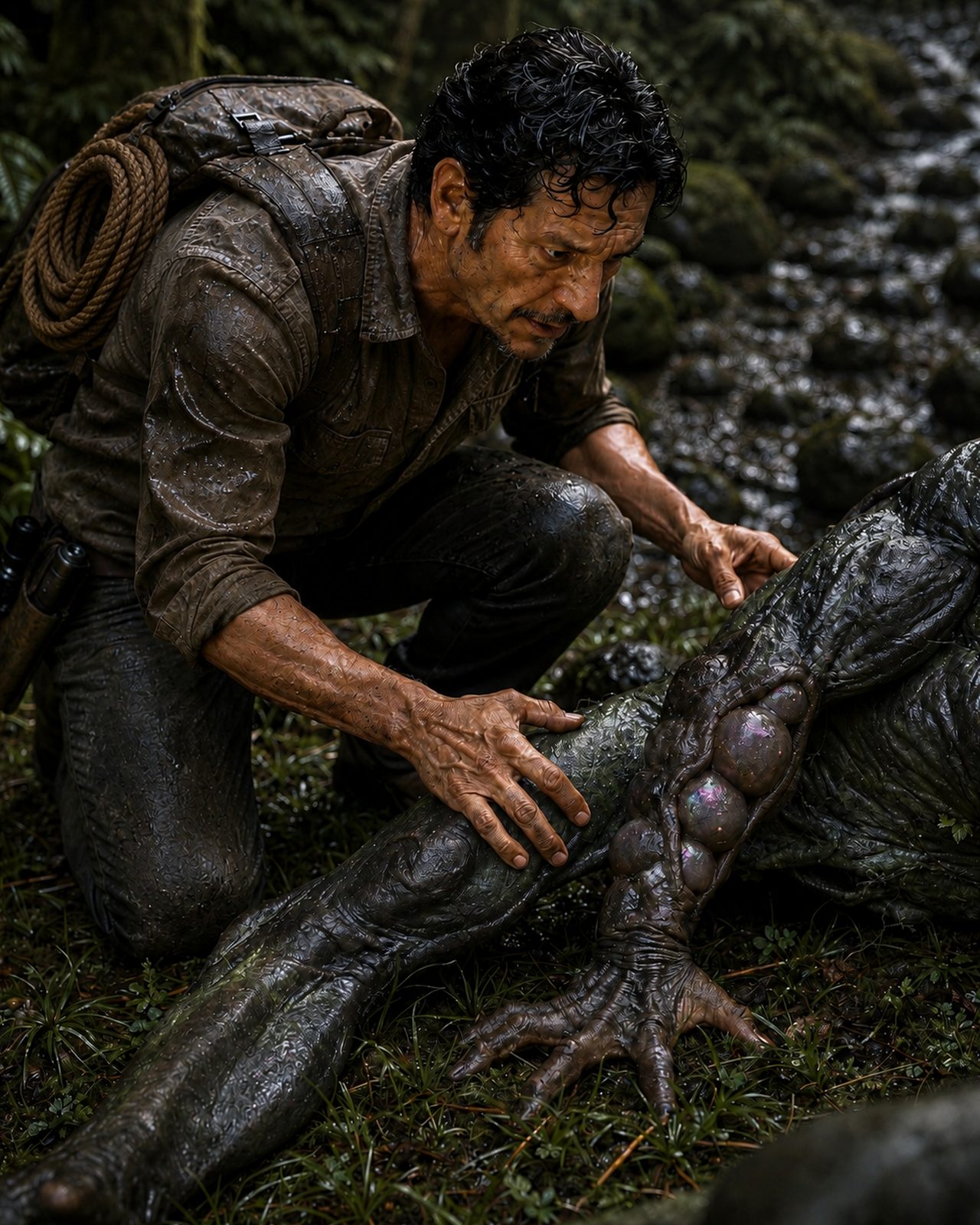
He touched the body. Nothing. He took it by the feet and pulled, and that was when he saw it. He didn't run. He would think about that, after — why he didn't run. Maybe a man who has already decided to end his own life has less fear left over for other things.
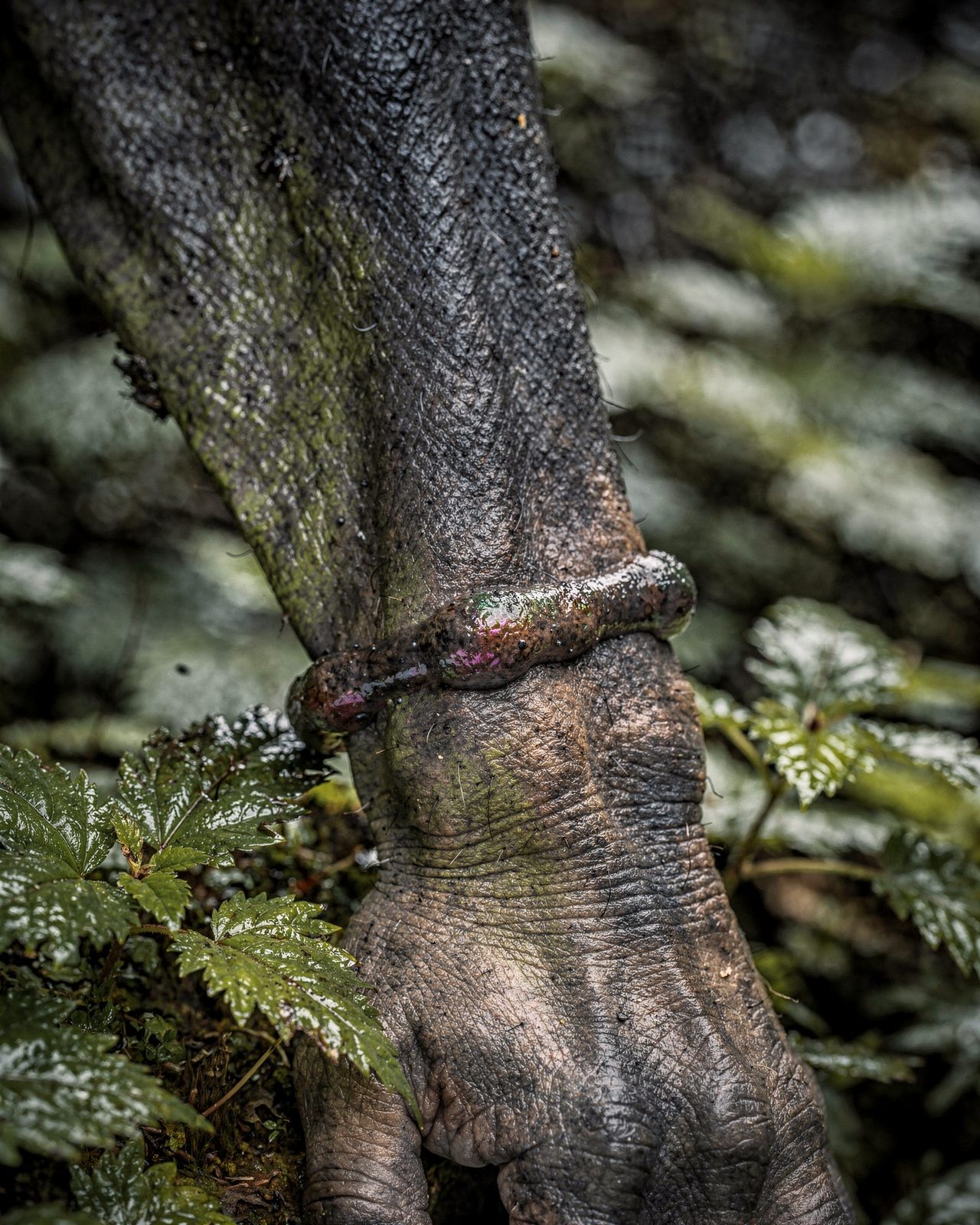
It was the arm of the thing in the nettles that he kept coming back to. The skin of its wrist had risen and thickened, swelling on swelling, crowded one against another the whole way round, and the grey-green of them was the grey-green of the arm they came out of. Under them something moved, slow, the way a breath moves under a blanket.
He built a fire he didn't need warmth for and sat beside a dying stranger from somewhere he had no word for, and did the only human thing he had left in him, which was to not leave.
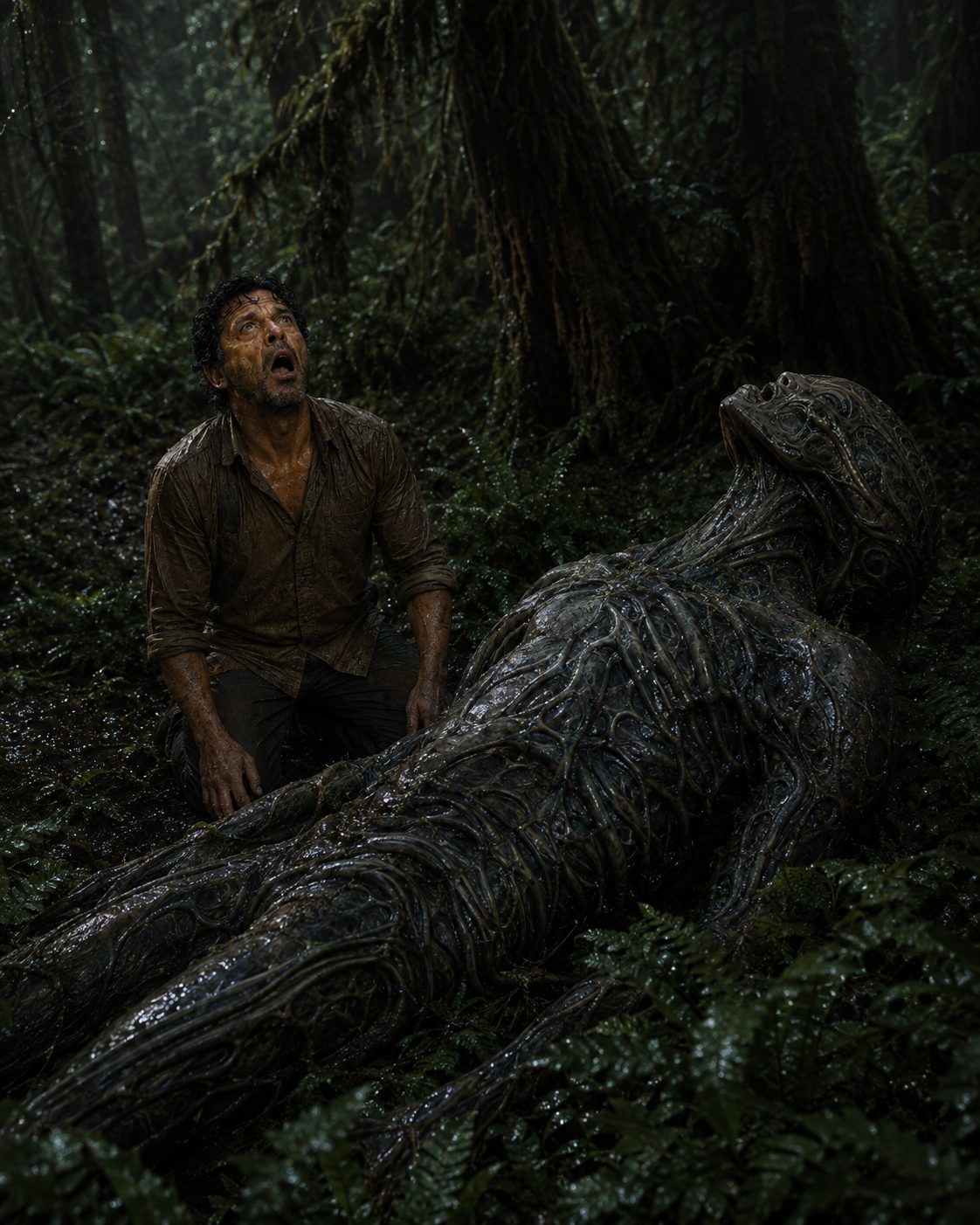
The alien did not wake to thank him. It did not wake at all. Sometime past midnight, by the fire's low red logic, its breathing changed from labored to shallow to something that might have been called peaceful in a human chest, and did not resume. Walt cried out. He did not know why.
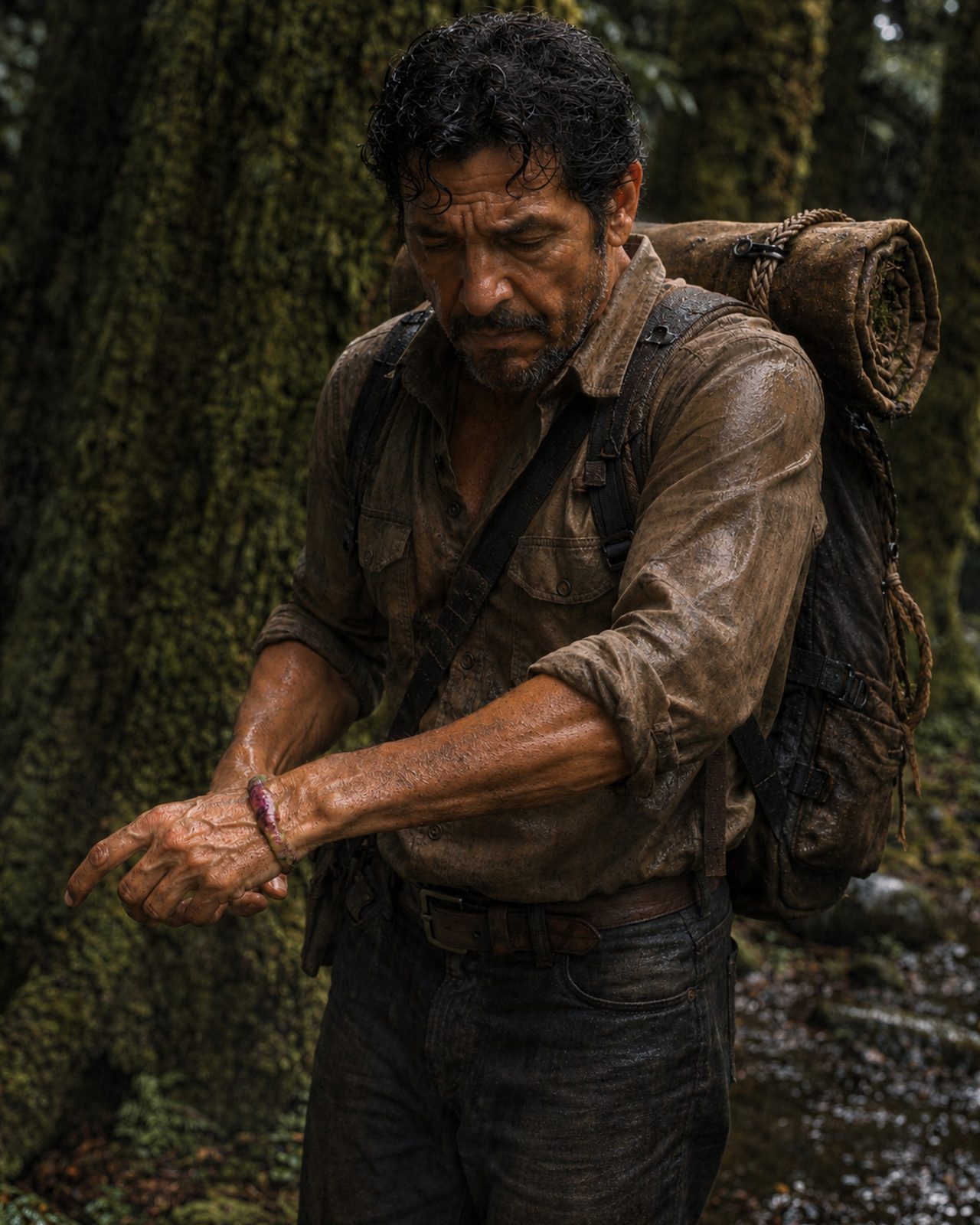
He did not remember lying down. What woke him was his own arm. There was a ring standing up in the skin of his forearm, a finger wide, where the night before there had been nothing, and no seam anywhere to say how it had come. It should have stayed on the dead, but nobody had asked him and nothing had been taken. The grey-green had mostly gone out of it. What was left was the color of his own arm, a shade darker, and warmer than the skin around it. Then it hummed. The sound was in the bone of his forearm, low and continuous and unmistakably alive, the way a struck wire goes on being struck.
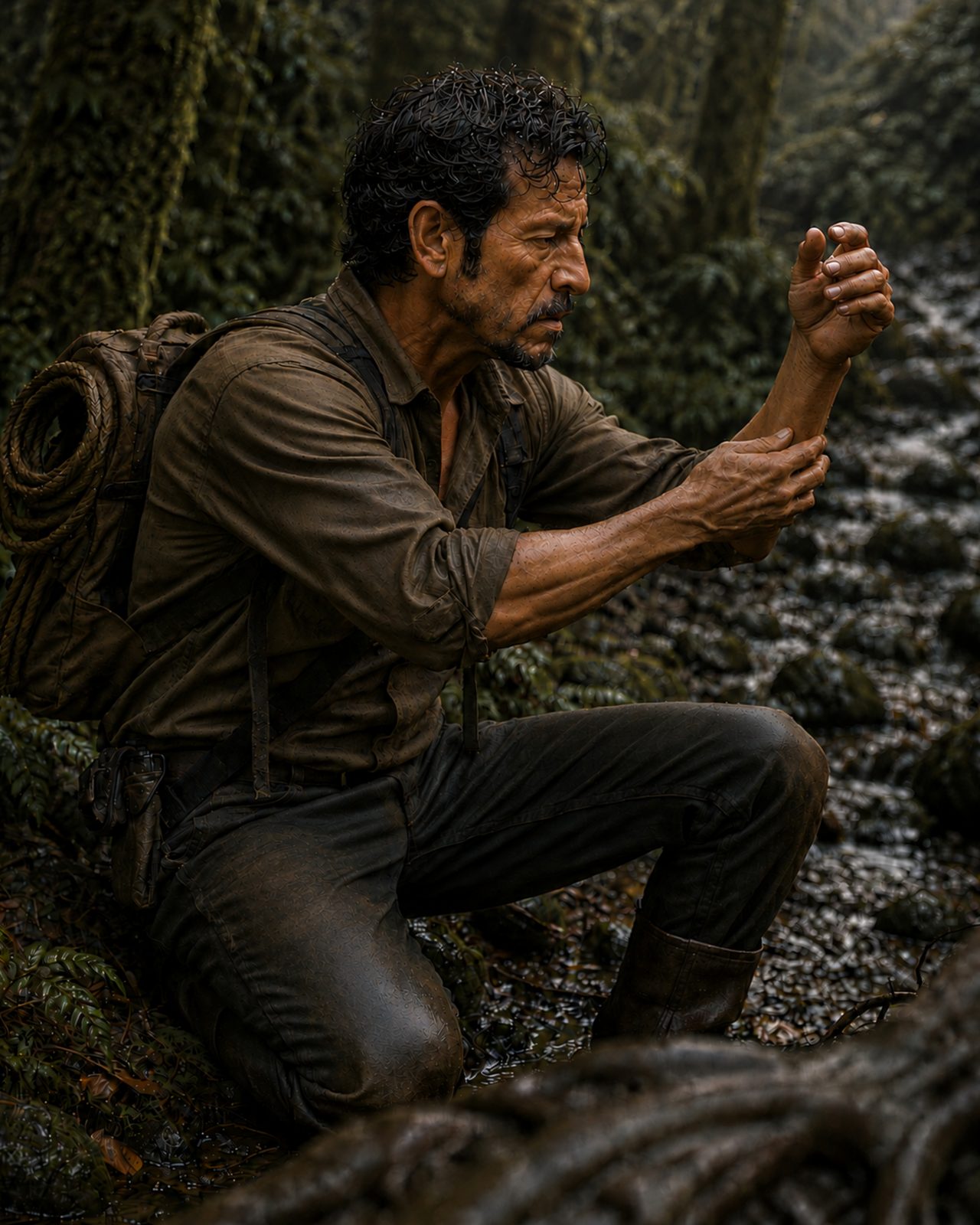
There was no voice. He wanted to be clear about that afterwards, and could never manage it. There was a pressure instead, an impression laid directly into the parts of him that language is built on top of, like a hand set flat against a window from the other side of the glass.
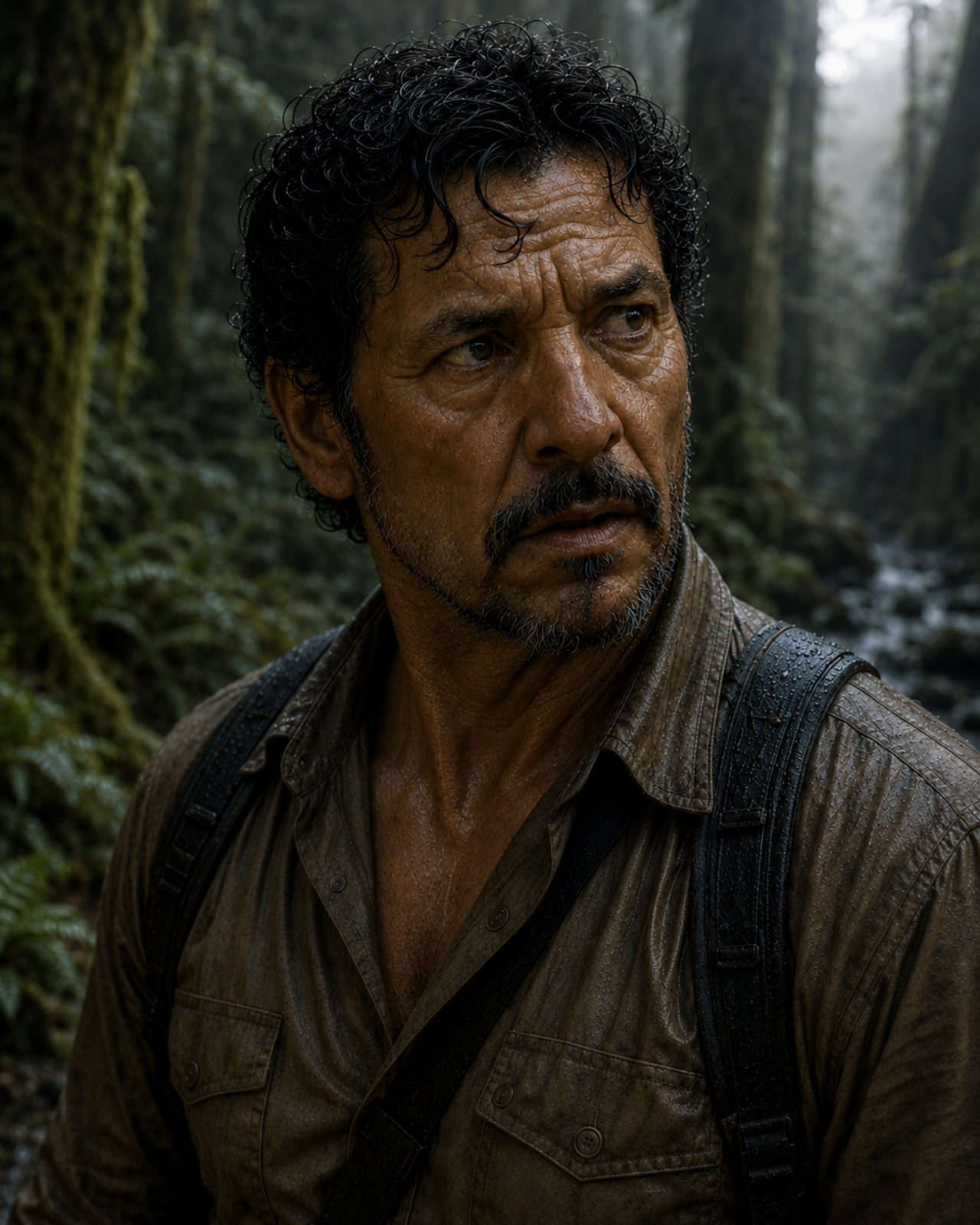
The impression came again as he stood, and it was not words, though words are the only way he could put it afterwards. The nearest he could get was: not finished. Not yet finished. Come. He took it for the dead thing's business, unfinished. It was a long time before it occurred to him that the unfinished thing might be himself. He did not come. Not that day. He sat instead with a body that had chosen, in its last accidental act, to hand him the ring he could not refuse, and Walt, who had walked into these woods to stop being anything to anyone, was responsible for something again.
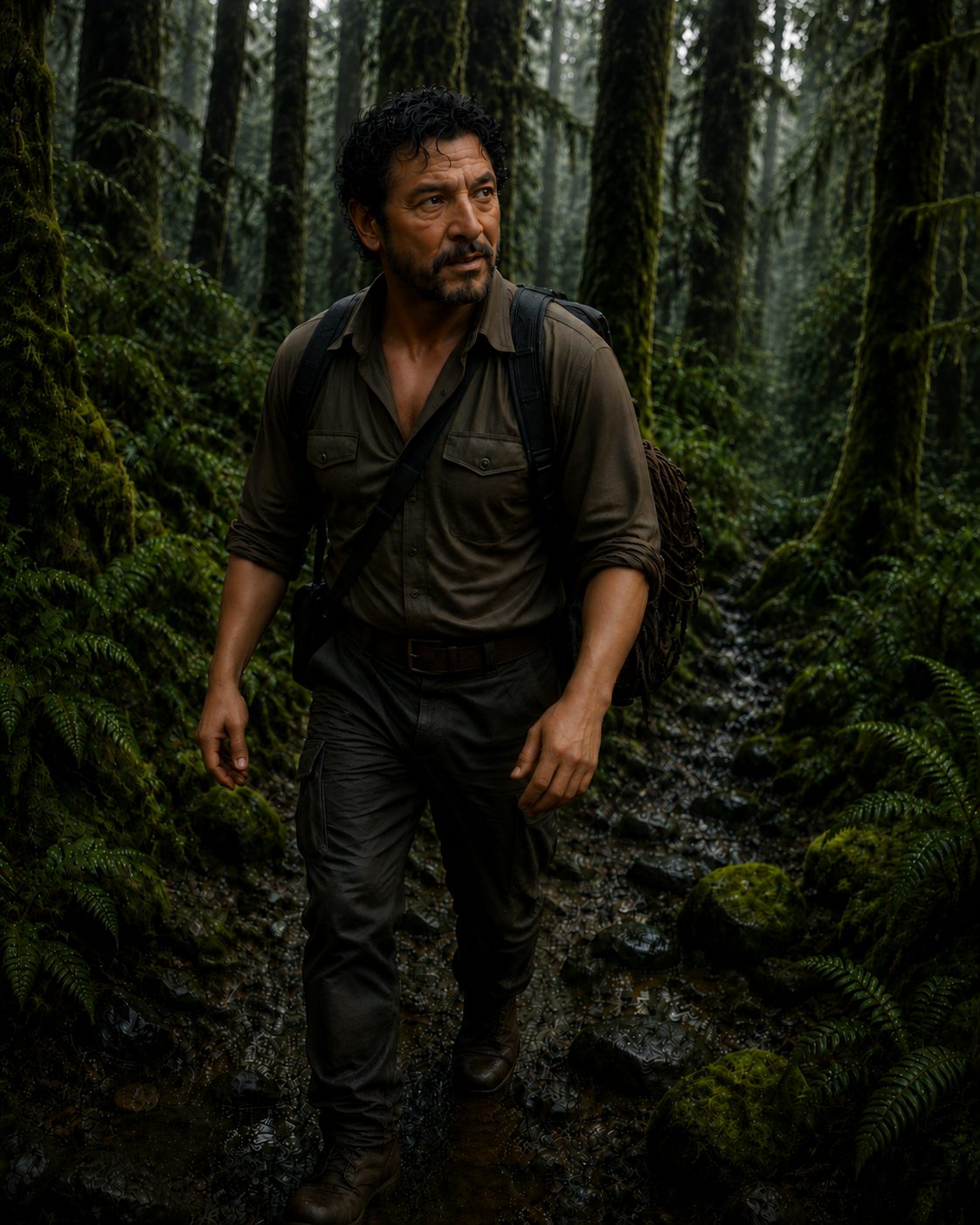
The changes were slow enough, at first, to deny. Colors sharpened before he noticed the sharpening. He could hold four threads of a problem where he used to lose the second one reaching for the third. He needed less. Less food, less sleep, less noise to feel steady — some tax he had been paying his whole life without knowing it had simply, quietly, been waived. Had he brought a mirror he would have seen it in his face.
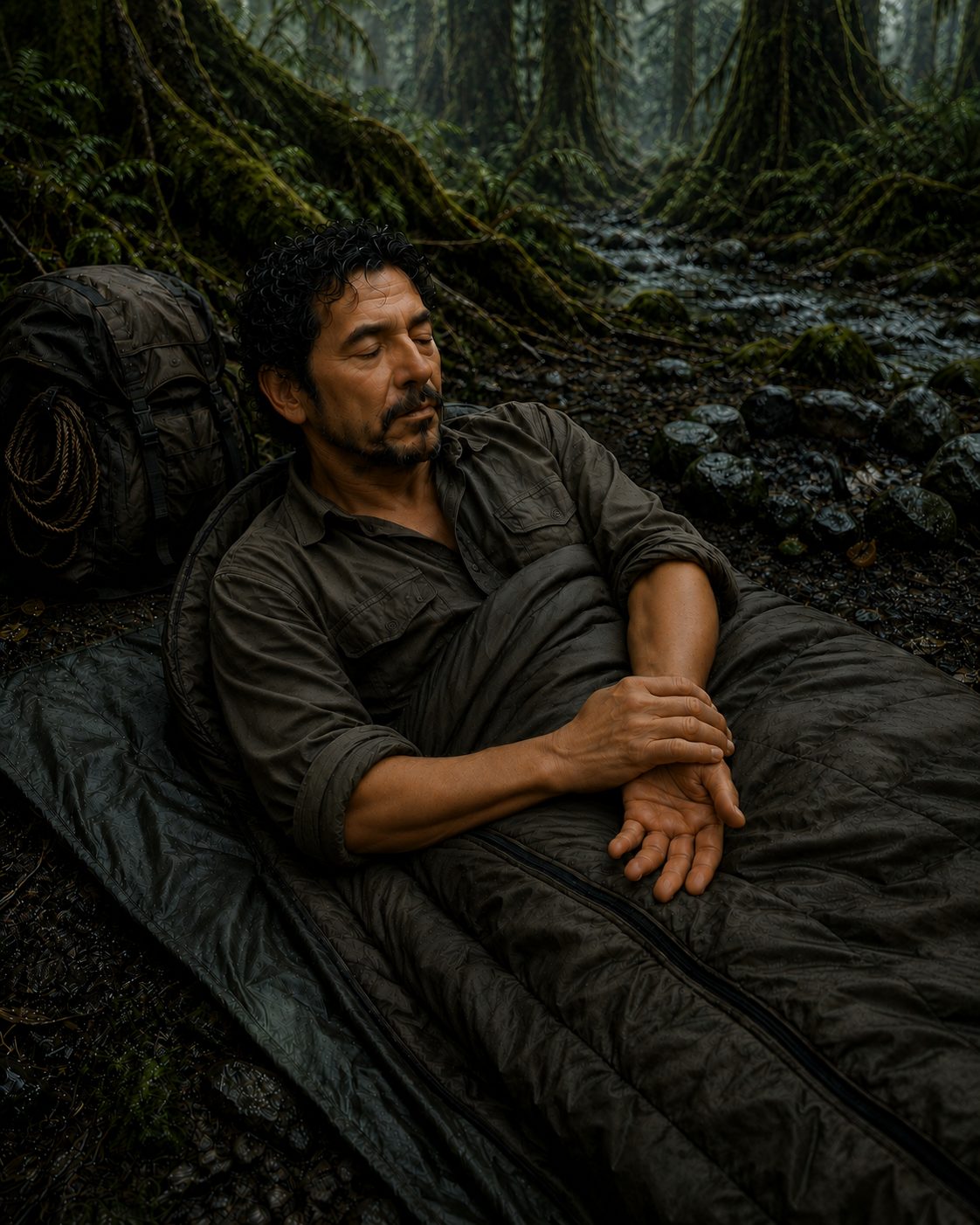
He was afraid of none of this. He was afraid the way you're afraid of good news you don't trust — afraid that it would be taken back, that he would wake one morning stripped of it and left only with the knowing of what he'd had. So each morning he found it with his thumb before he opened his eyes, and each morning the hum was still there, and the little sheen of green and violet went on turning over under the skin.
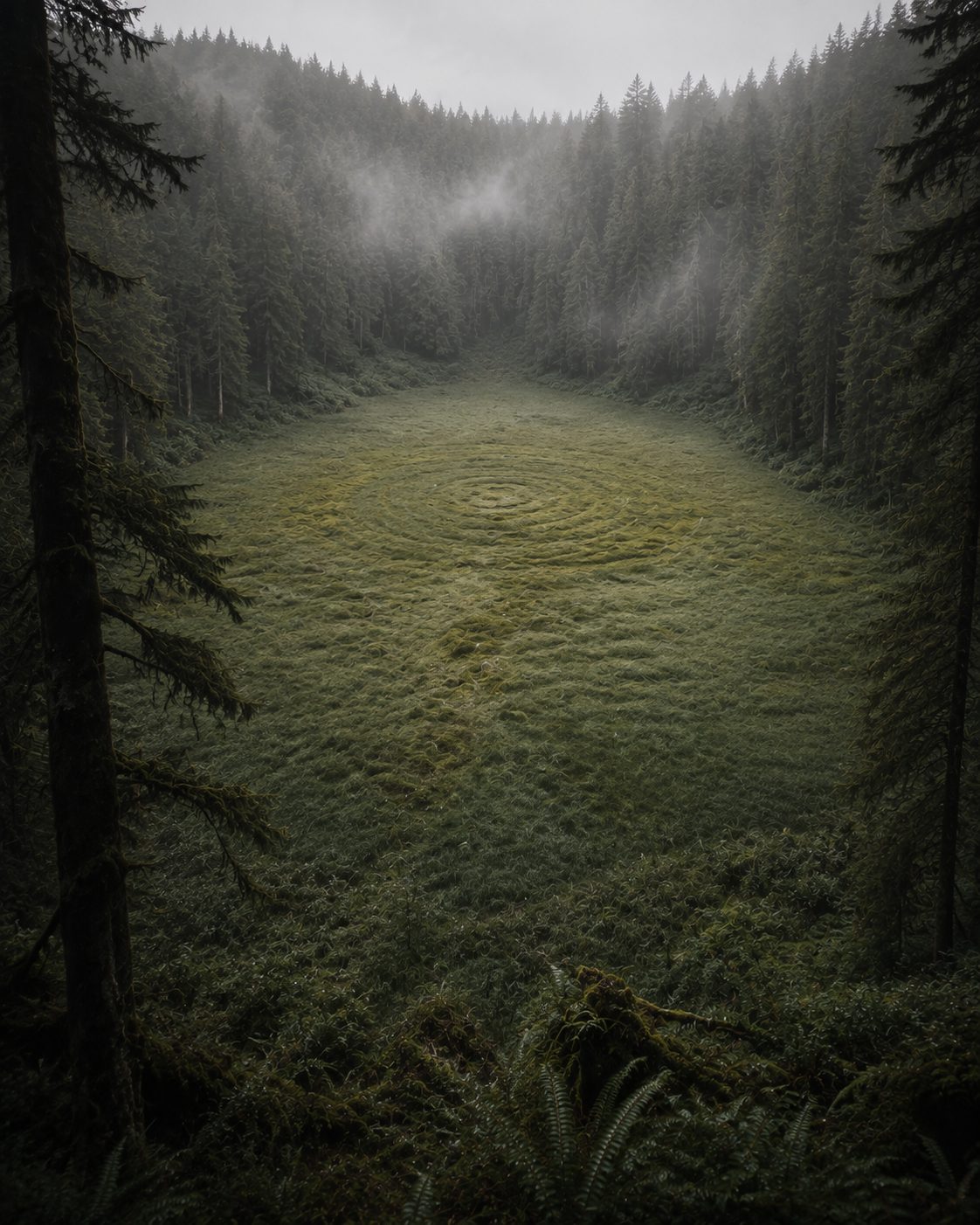
The presence pulled him northwest, toward the low grassy meadow where the ground didn't sit quite right, where moss grew in patterns too even to be moss, where the birds had gone quiet in a rough circle nearly forty yards across and never explained why.
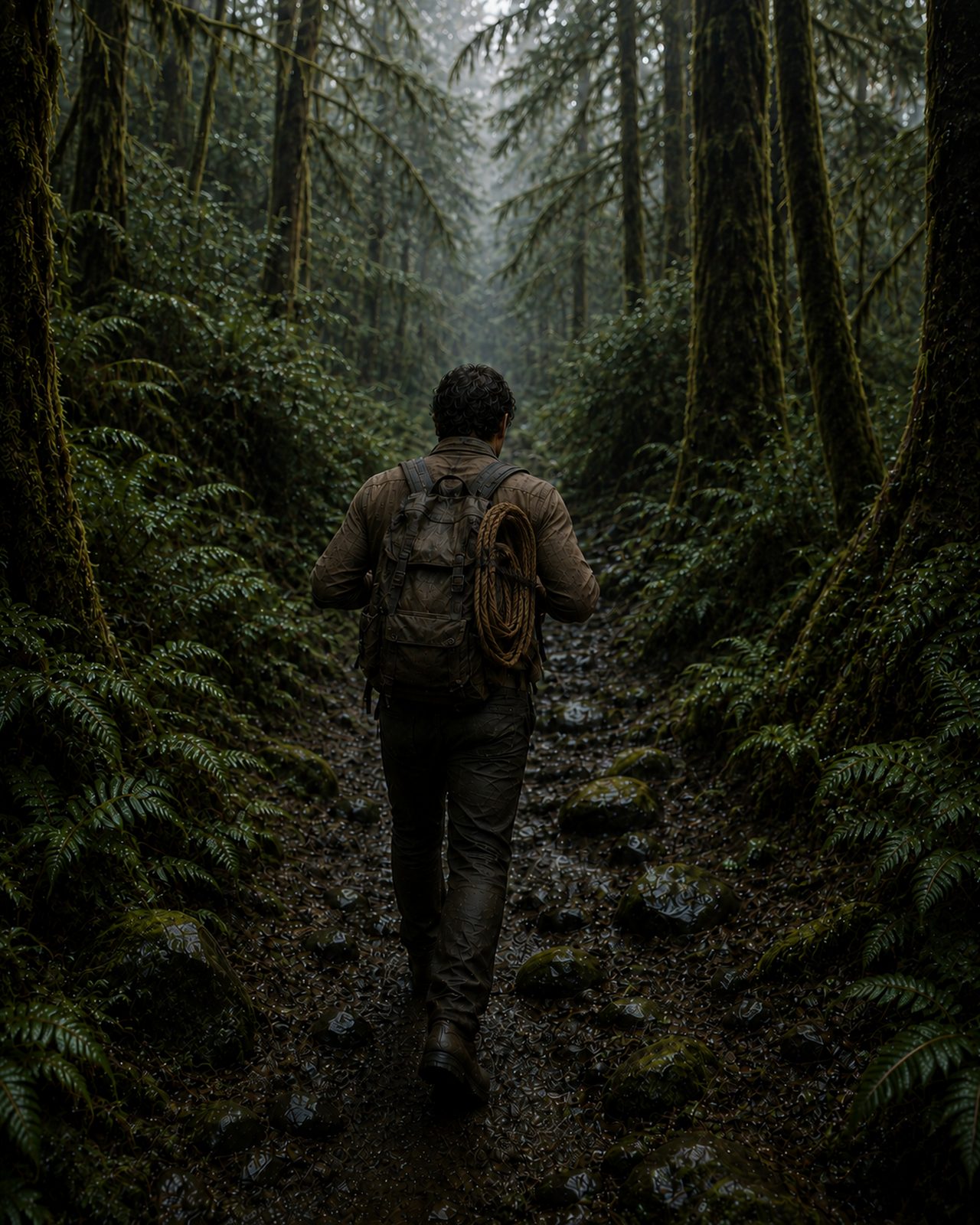
He went there because a part of him that was no longer entirely his own wanted him to, and because — for the first time since he'd left what used to be his home — something wanted him at all.
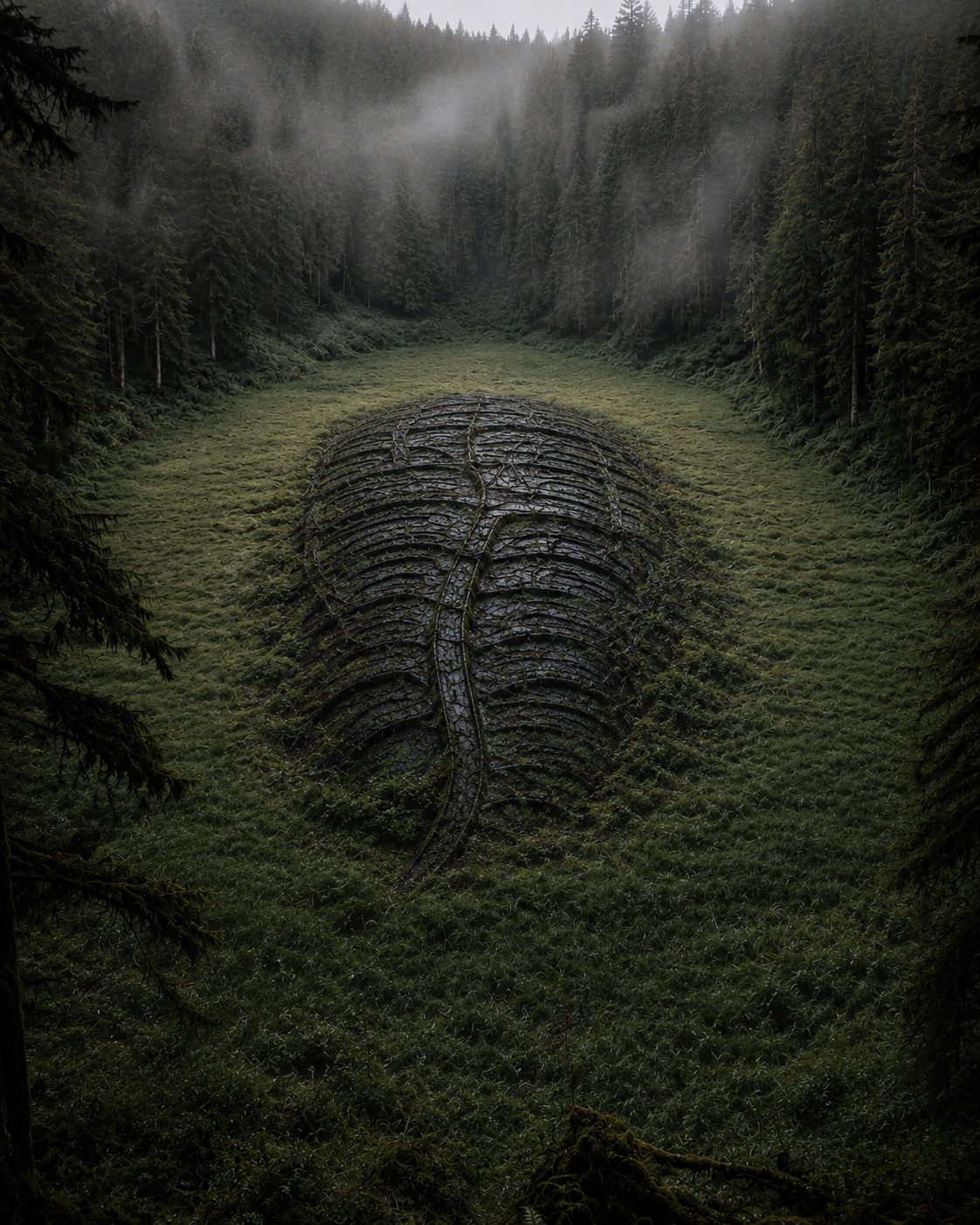
He found the ship by degrees: not seeing it, and then unable to stop seeing it. A held breath in the land itself, grass grown thick and strange across curves too smooth for hillside, mud settled into it with the patience of something that had been waiting a very long time.
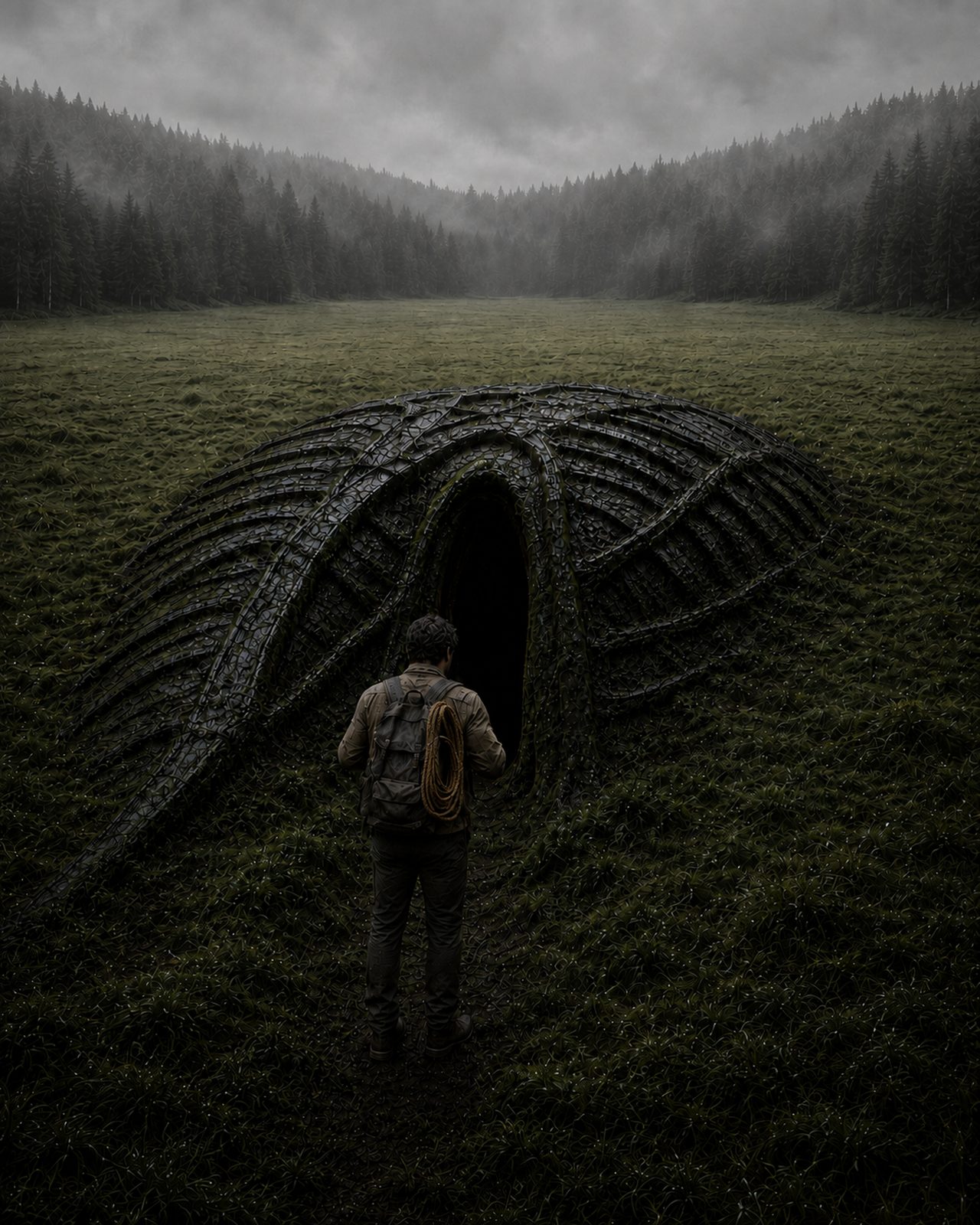
The opening was simply there, and he could not say when it had arrived. The shell had given him a door and left it at that. No host waited to explain herself. Beyond it ran a long low gallery, dim and warm, the air in it moving slightly, and in it: others.
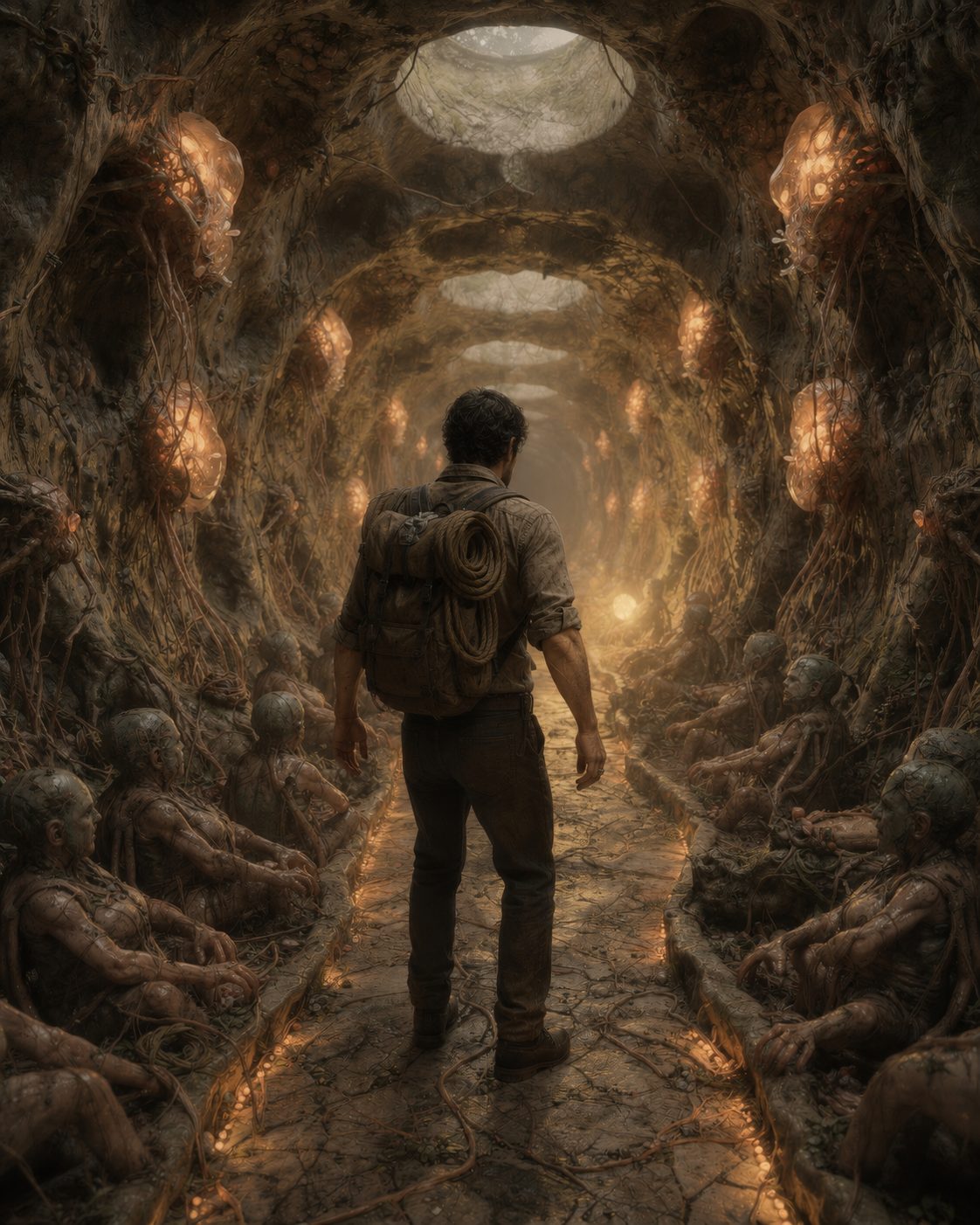
Every one of them alien, and some of them past any name he had. Beings who had also, somewhere, in some ordinary meadow or reef or cave on some world Walt would never see, been found wanting by whatever standard their own lives had judged them by — and had been picked up anyway. Kept anyway. Not repaired. Not fixed. Kept. Standing there, without a single word spoken to him, he understood it for a home: one that had never once, in all its ranging through the dark between worlds, turned anyone away at the door.
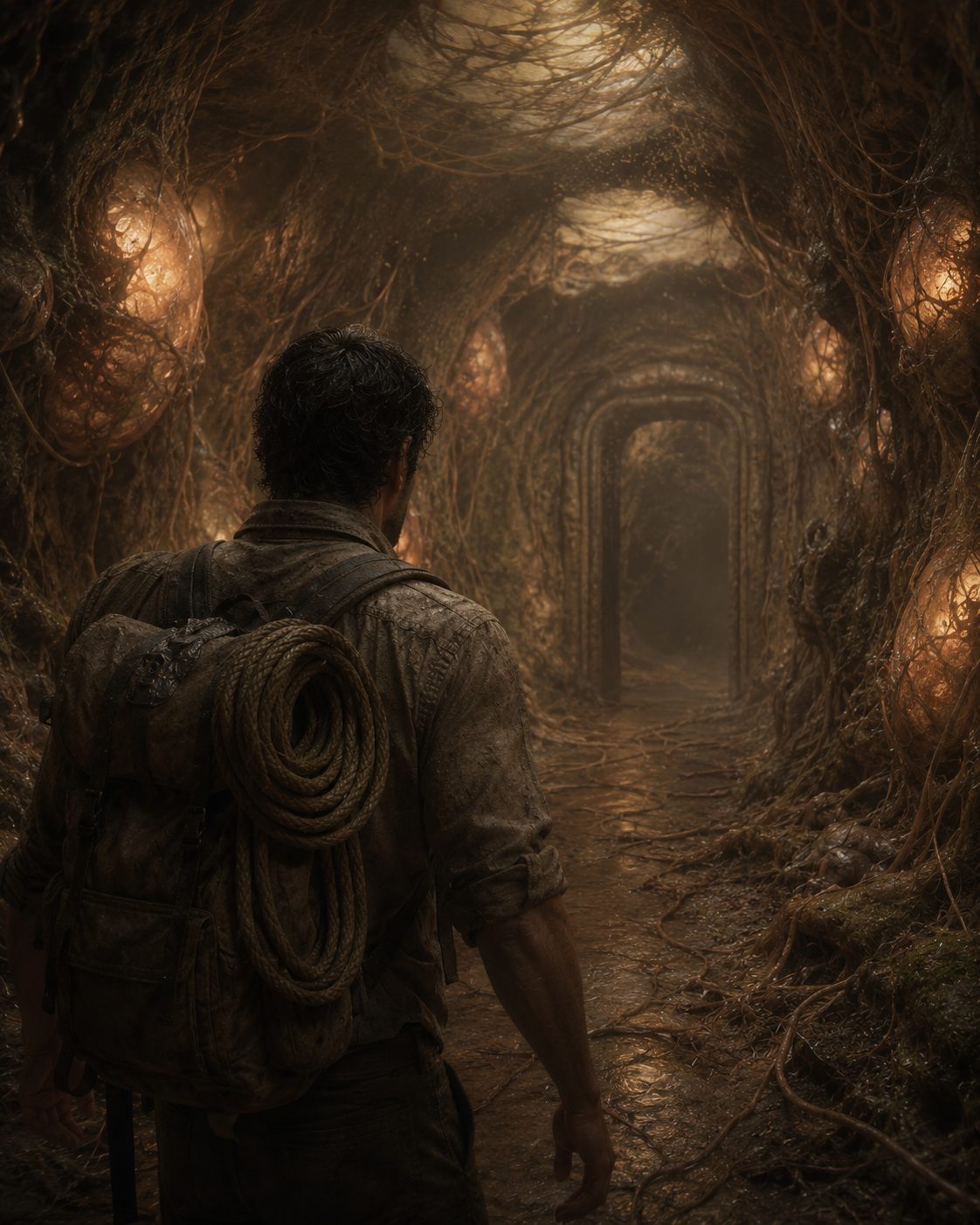
The presence was stronger now. It came in as a pressure system, settling over him until he understood the air itself had changed. He never saw a face, if there was a face to see. What he felt was closer to being read — every year of him at once, the bad ones included, and nothing in the reading recoiled. The opening behind him closed. Air moved around him. Beyond it was another opening, more of a door.
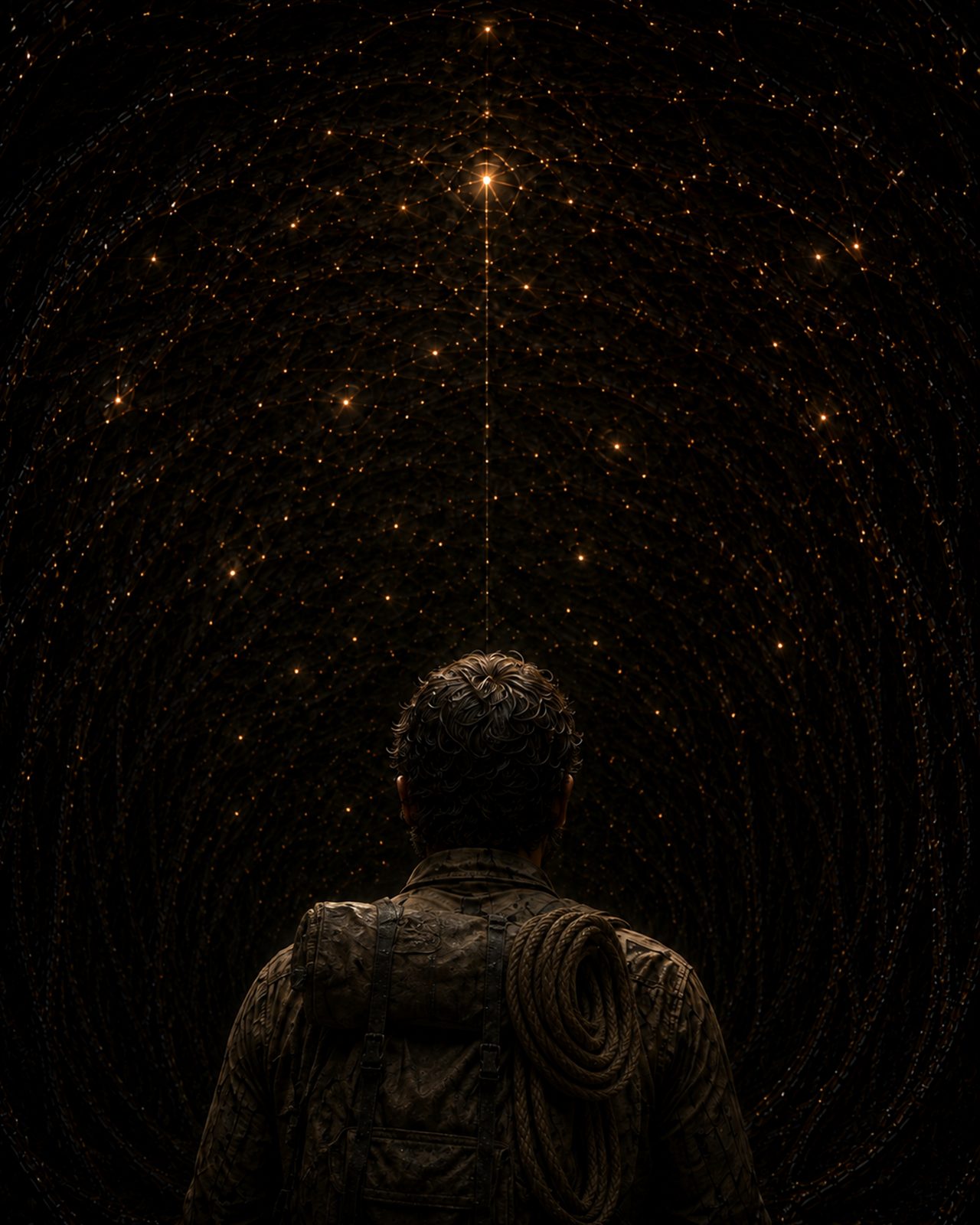
As he walked through the door it closed behind him. There, before him, was the presence. He knew it. He thought of it as her from that moment, and could never afterwards say why. There was a tone, low and layered, and he recognized rather than translated what it was made of: many smaller tones together. Hundreds. Maybe more. Each one a life she had gathered up rather than let end unwitnessed. And somewhere in that chord, faint and new, was a note that was his.
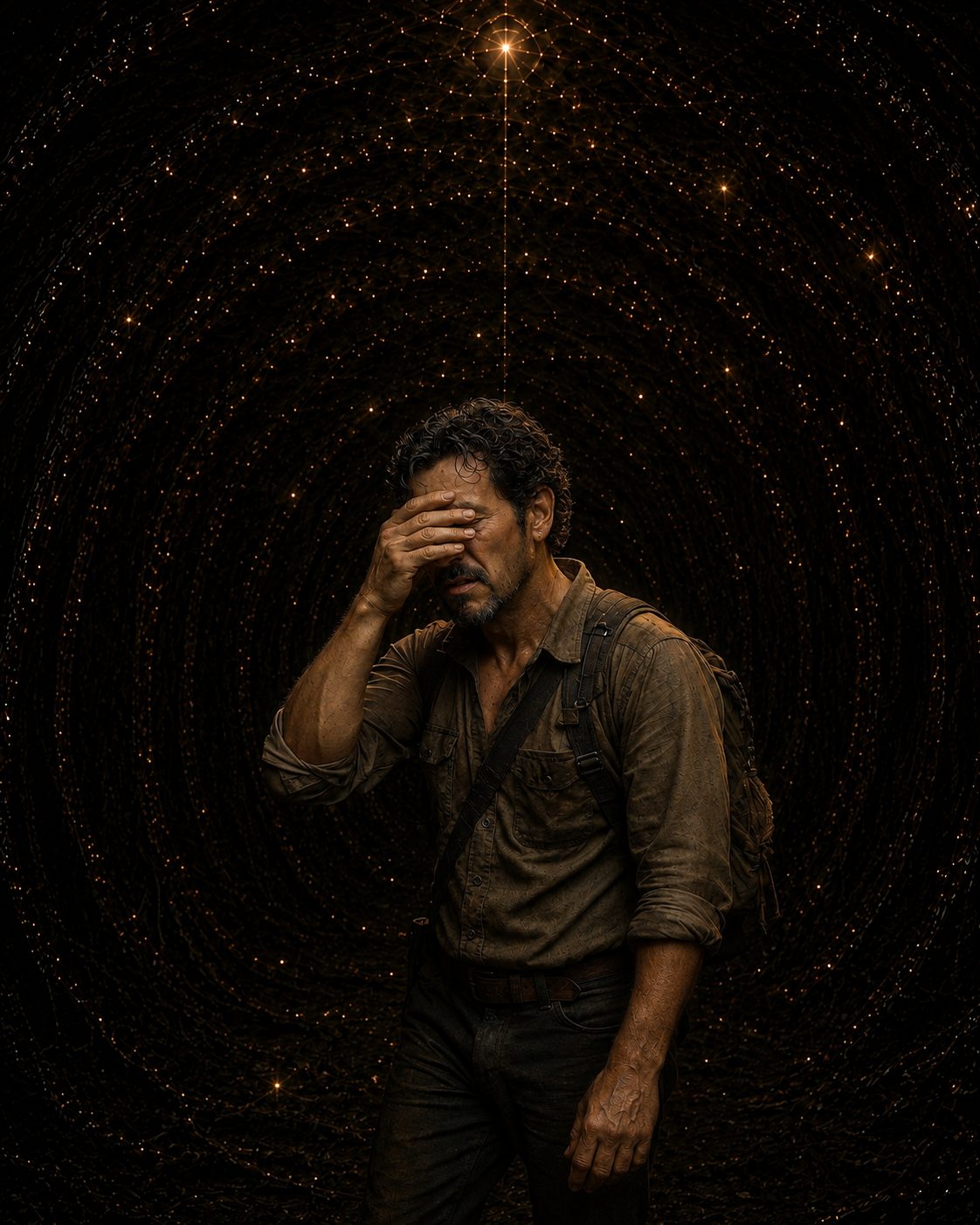
He wept, there, in a way he had not let himself do in the woods with a rope he never used and a plan he never finished. It was the specific, unbearable relief of being seen by something that did not require him to have turned out well.
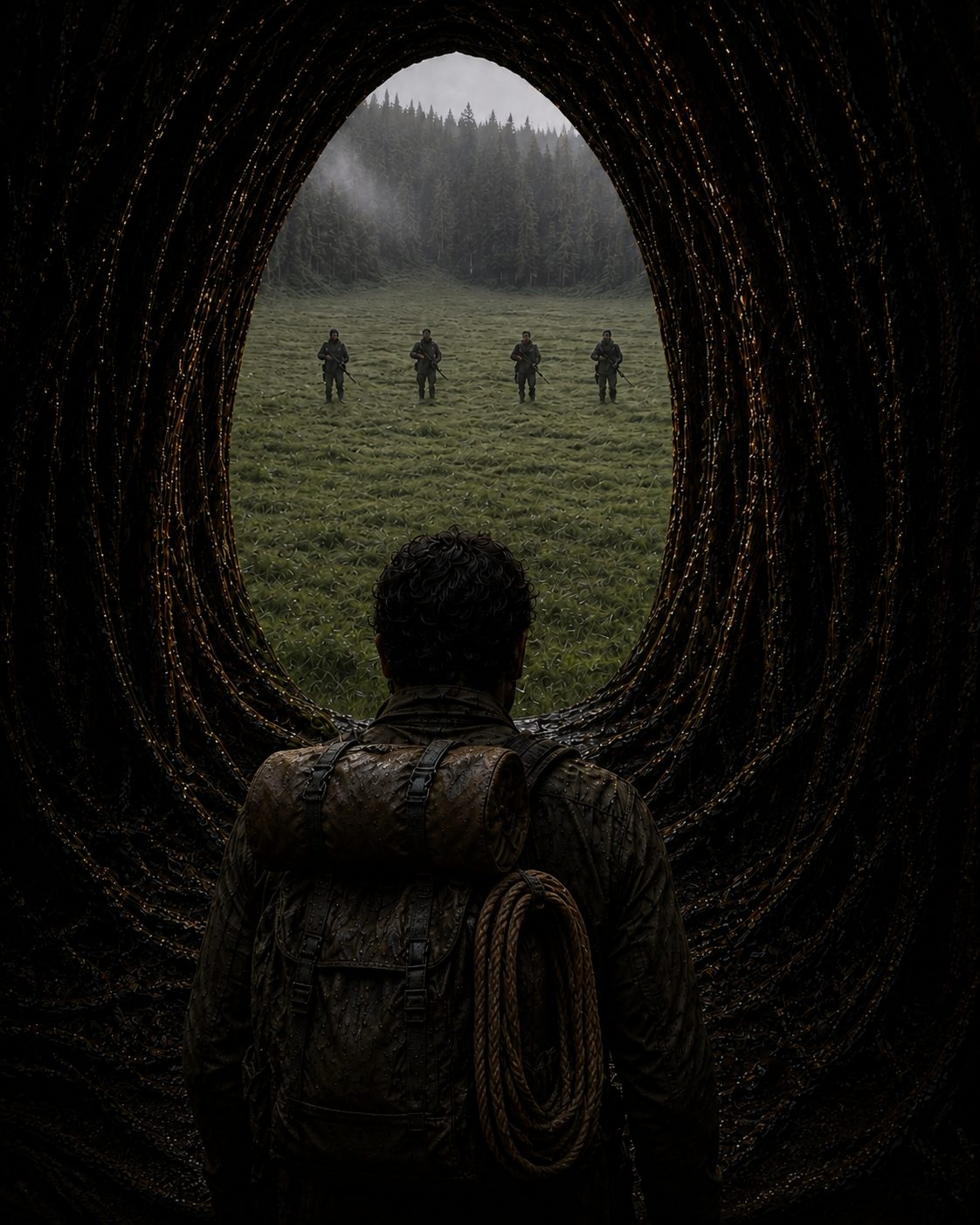
After some minutes Walt came back down the gallery and stood in the open threshold as the tree line lit with headlights. Unmarked vehicles, men with rifles and forms to fill out. He understood, with a clarity the presence had given him and would now take back, that there was no version of tonight where he walked out to explain himself. They would have no room, in whatever story they told themselves afterwards, for a homeless man made whole by something that only ever wanted to keep him. He looked back once — at the tree line, at the country that had already let him go months before any of this began — and then did not look back again as the opening closed.
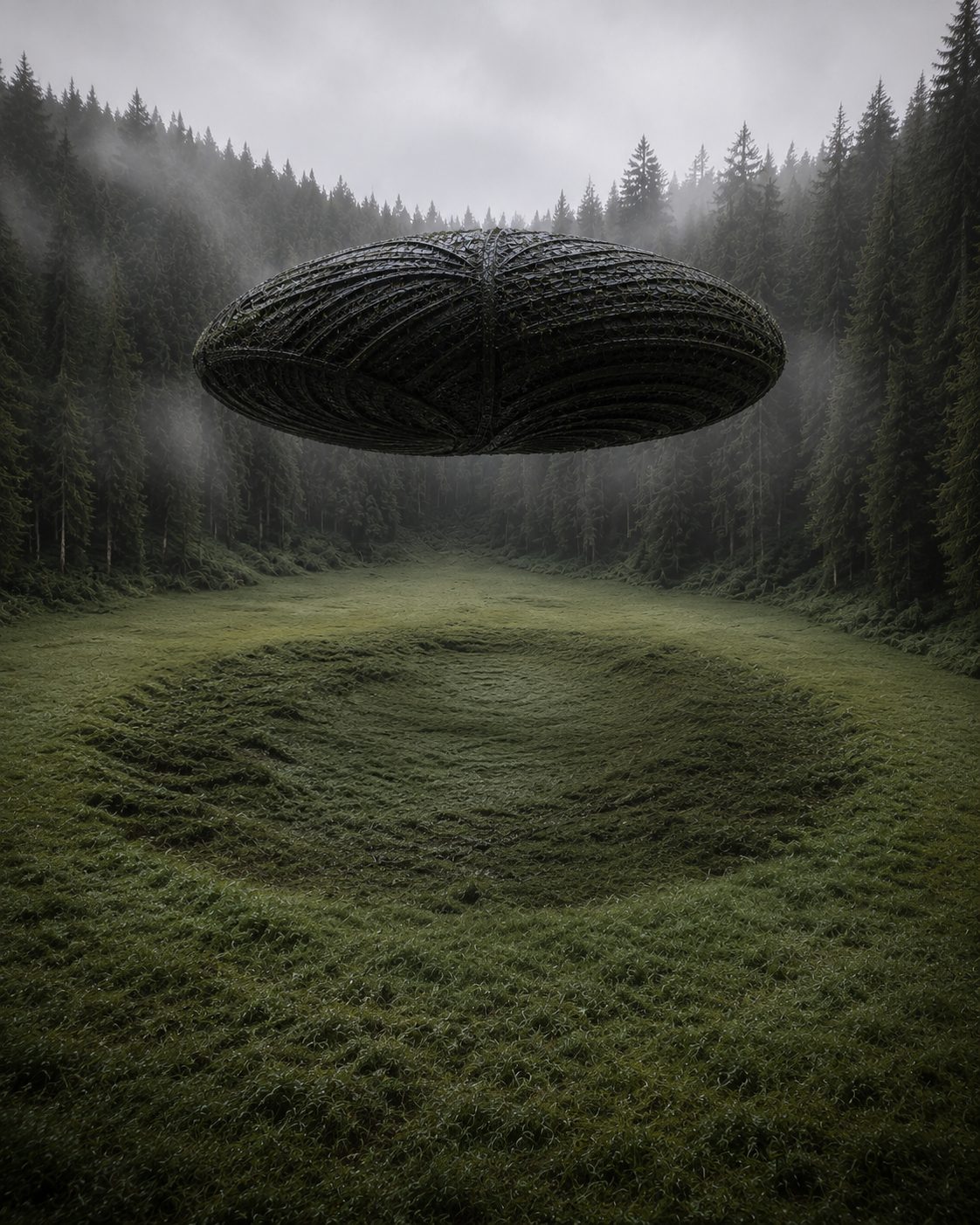
The ship was simply, unhurriedly, no longer where it had been.
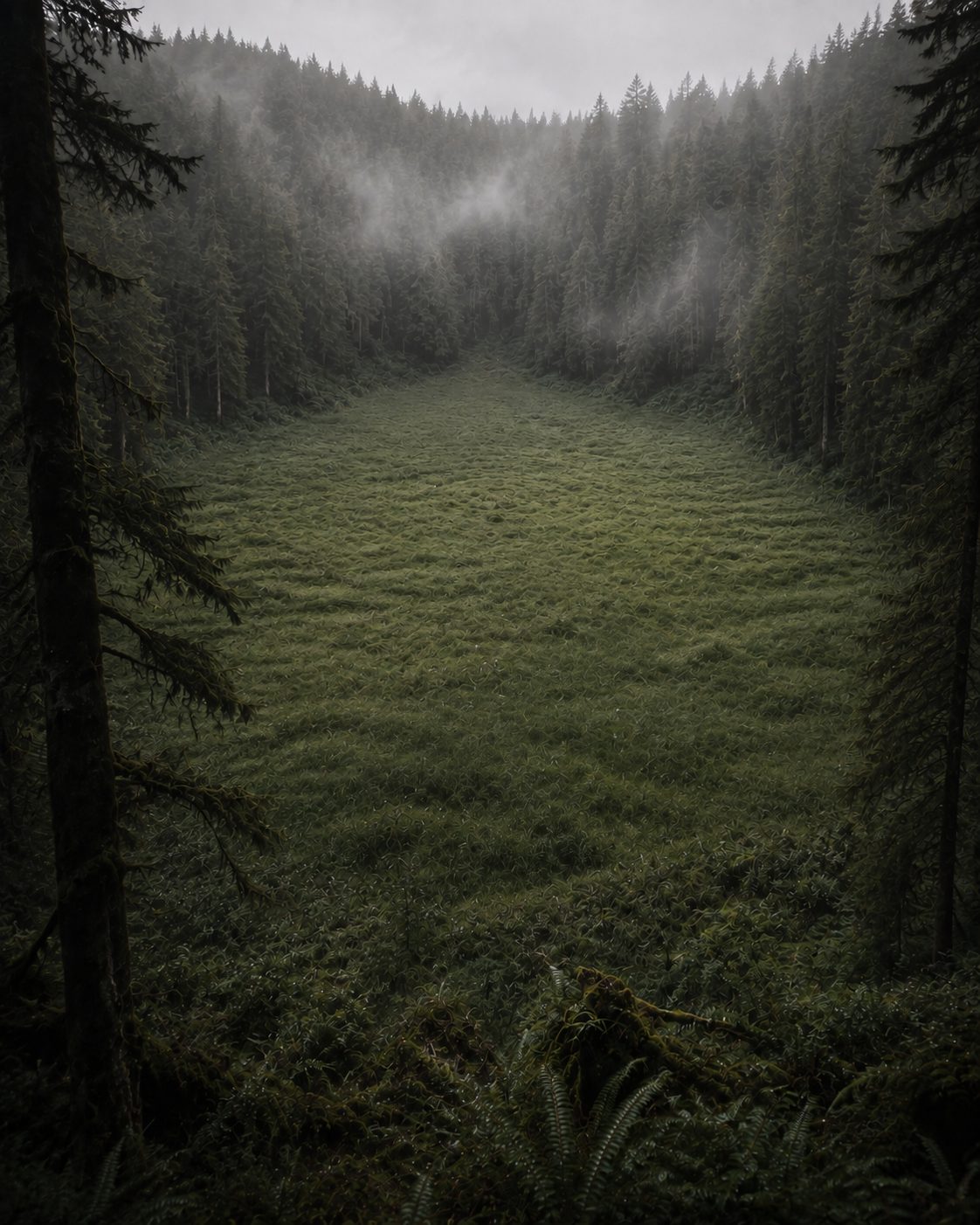
Behind him, men searched a meadow and found flattened earth and a scorch of confusion they would spend years trying to close a file on. The grass came back over the shape by degrees. Somewhere ahead of him — nowhere, and everywhere, and every meadow and reef and dark corner of every world she had ever quietly loved something out of its ending — Walt's tone settled in among the others. And below, in a country that would never know what it had lost that night, the forest closed back over the place he had gone to disappear.